
Hiring someone to work on your website is a leap of trust. Most business owners can’t evaluate the quality of the work they’re buying — which makes it easy to pay for things that don’t help, or that actively cause damage.
These questions won’t guarantee a perfect outcome, but they’ll filter out the worst options and give you a clearer picture of what you’re actually getting.
What will you actually do — and what won’t you do?
A specific answer to this question is a good sign. “We’ll improve your SEO” is not specific. “We’ll fix your page titles, submit your sitemap to Search Console, and compress your images” is specific.
If a developer or agency can’t tell you what they’ll actually do before you pay, you have no way to hold them accountable afterward.
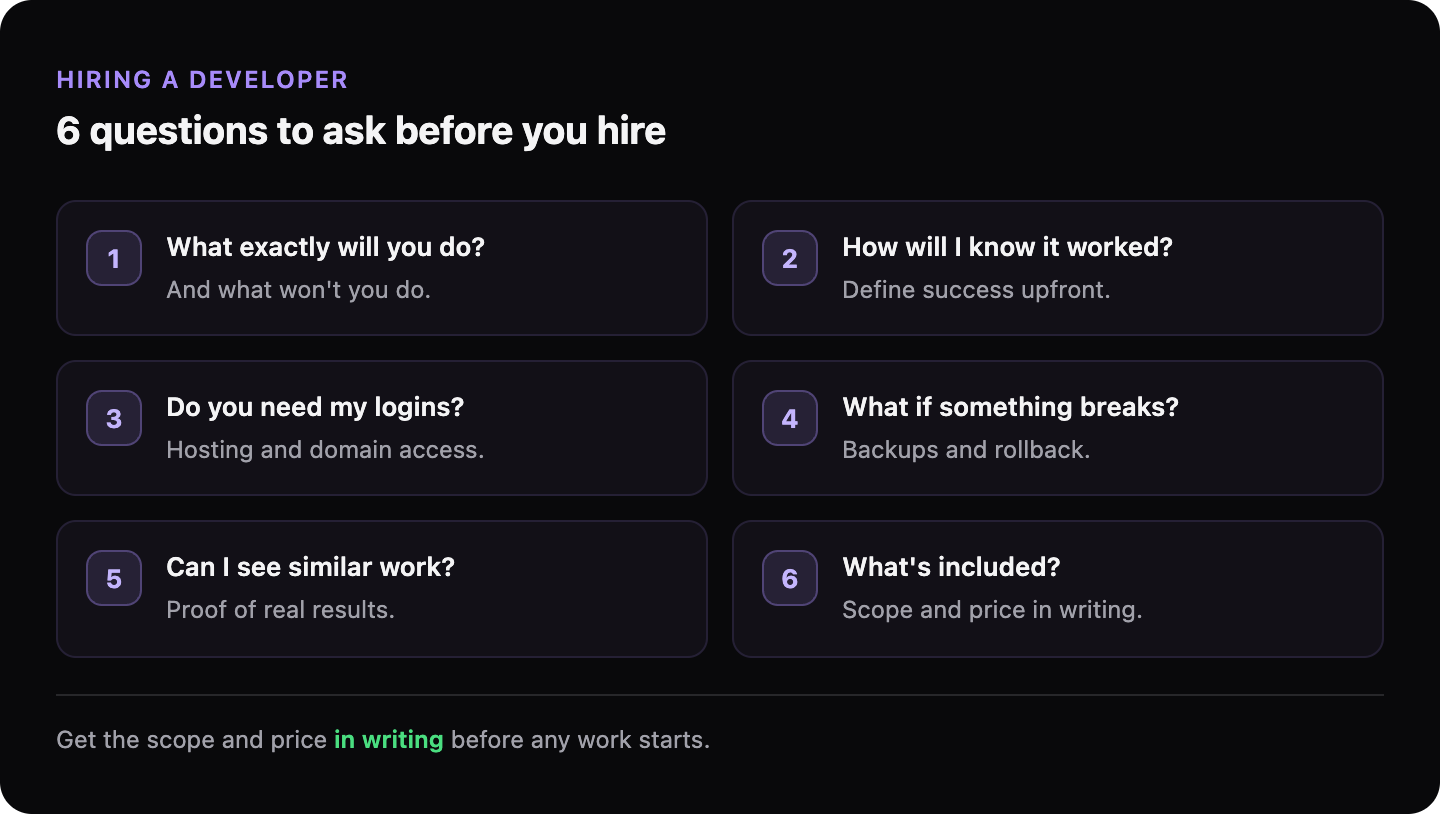
How will I know if it worked?
Good work produces measurable results. Ask what metric will show the improvement — more organic traffic, better Google Search Console data, faster page load times, more enquiries.
If the answer is vague (“you’ll see better results” or “it takes time”), push for specifics. Some results do take time, but the developer should still be able to name what you’ll eventually see.
Do you need access to my hosting or domain?
This question has two purposes. First, it tells you what kind of work they’re doing — someone doing real technical work will need server or CMS access. Second, it’s a prompt to keep a record of what access you’ve given and to whom.
Never hand over sole access to anything. You should always have your own login that works independently.
What happens if something breaks?
Work on a live website carries risk. Changes to code, plugins, or settings can cause problems. Ask what the process is if something goes wrong — do they have a backup? How quickly can they restore the site?
A developer who can’t answer this question hasn’t thought through the risk.
Can I see examples of similar work?
Results matter more than portfolios, but case studies or references from similar businesses help you calibrate what to expect. A developer who has fixed indexing issues for local businesses is more useful than one who has built beautiful sites for startups.
What’s included and what isn’t?
Scope creep is the most common cause of billing surprises. Get a clear list of what’s included, what’s not, and what happens if additional work is needed during the project.
→ Read more: How to talk to a web developer when you’re not technical
→ Read more: When to fix your website yourself and when to hire someone
→ Back to the full picture: What does a website audit actually tell you?
A GhostSite report gives you a precise list of issues to brief a developer on — so you know exactly what to ask for.